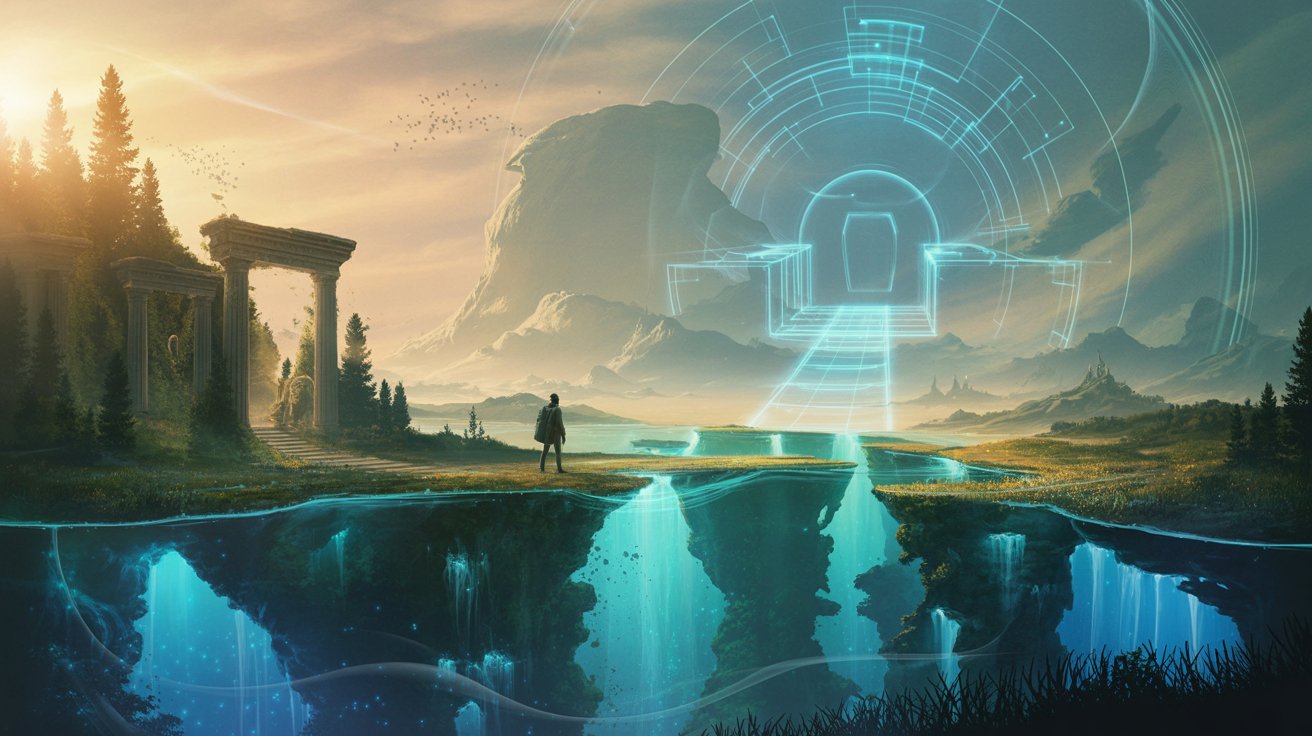
Daskusza exploration is a concept that has rapidly gained attention for its mystery, depth, and multidimensional nature. While the term itself feels ancient, almost mythical, it has only recently entered mainstream discussions among researchers, travelers, digital explorers, and creative thinkers. At its core, daskusza exploration refers to the study and discovery of hidden worlds—whether those worlds exist in remote geographical landscapes, the deep sea, digital realms, or even within the mind.
Because it embraces both literal and symbolic exploration, the idea remains flexible, evolving, and deeply captivating to anyone with a sense of curiosity. In an age where much of the world feels mapped and documented, daskusza exploration invites people to step into the unknown with renewed wonder. It serves as a reminder that there is always more to uncover, more to question, and more to experience beyond the surface layer of everyday life.
The Origins and Meaning of Daskusza
The origins of the term “Daskusza” are frequently debated, adding to the mystique of the concept. Some linguistic theories suggest that it may stem from a blend of Slavic and Central Asian roots, loosely translated to phrases associated with “hidden land,” “whispering earth,” or “dimensional passage.” Others believe the term emerged from modern academic backgrounds where researchers needed language to describe multi-disciplinary or multi-dimensional inquiry. Regardless of its true birth, the meaning of Daskusza has transformed into a broad representation of exploration beyond conventional boundaries.
You might also like



It encompasses the study of forgotten civilizations, obscure ecosystems, online subcultures, psychological terrains, and even speculative worlds in literature and art. This ambiguity grants the term a special power: it can be adapted to any context where the goal is to understand, uncover, or experience deeper layers of the unknown. The flexibility of the meaning allows enthusiasts to build their own interpretations, making daskusza exploration both personal and universal.
The Many Forms of Daskusza Exploration
Geographic Daskusza
One of the most fascinating interpretations of daskusza exploration is the idea that it refers to a mysterious or historically significant geographic region. Some writers associate Daskusza with remote landscapes stretching across parts of Eastern Europe or Central Asia—places filled with dense forests, abandoned ruins, and ancient settlements. These areas often blend folklore and archaeology, inviting researchers to investigate legends about forgotten kingdoms, sacred groves, or uncharted paths that may have once connected old trading cultures.
Geographic Daskusza represents physical environments where the land itself holds secrets waiting to be discovered. Explorers interested in this angle often combine traditional fieldwork with modern tools such as GPS mapping, archaeological surveys, or even drone-based imaging to uncover physical clues embedded within the earth.
Scientific and Deep-Sea Daskusza
Another form of daskusza exploration focuses on scientific frontiers, especially the deep sea, which remains one of the least understood environments on the planet. Here, Daskusza symbolizes zones of extreme mystery—underwater trenches, hidden ecosystems, submerged ruins, or undiscovered species. Scientists use advanced technologies like automated submersibles, high-resolution sonar, and multi-layered environmental sensors to analyze these dark, untouched worlds.
This type of exploration reflects a growing interest in multidisciplinary research, where biology, geology, chemistry, and climate science converge. Deep-sea Daskusza exploration is not only about discovering new organisms or formations but also about understanding how life adapts to pressure, darkness, and isolation. It showcases how the unknown continues to inspire innovation and curiosity across scientific disciplines.
Digital and Everyday Daskusza
In a modern digital world, daskusza exploration extends far beyond physical landscapes. The internet itself contains hidden corners, forgotten forums, obscure archives, niche communities, and unindexed digital spaces that many have never encountered. Digital Daskusza exploration involves uncovering these overlooked pockets, following data trails, and studying online subcultures that operate outside mainstream visibility. But everyday Daskusza is even simpler and more accessible: it involves noticing overlooked details in daily life, discovering new perspectives within familiar surroundings, and paying attention to small wonders people often ignore.
This interpretation encourages individuals to approach their own city, neighborhood, or hobbies with the same curiosity they would apply to a distant, exotic land. By doing so, they often uncover meaningful stories, rich histories, or surprising insights hidden in plain sight.
Psychological and Symbolic Daskusza
Some thinkers view Daskusza as an inner landscape rather than a physical or digital one. Psychological daskusza exploration involves examining the self through reflection, creativity, and emotional awareness. It emphasizes the idea that the mind contains unexplored territories—memories, dreams, motivations, fears, and desires—that shape consciousness and behavior. This symbolic interpretation aligns with philosophies of introspection and personal growth, where exploration means understanding the deeper layers of one’s identity.
Many individuals find that the process of exploring internal worlds is just as complex and rewarding as navigating distant lands. In this way, Daskusza becomes a metaphor for transformation, helping people connect with their intuition, challenge assumptions, and expand their sense of possibility.
Fantasy and Fictional Daskusza
Daskusza exploration also thrives within creative storytelling. Writers and artists have used the concept to build imagined worlds filled with unique landscapes, ancient mysteries, fantastical beings, and cosmic phenomena. In fantasy and science fiction, Daskusza often serves as a realm beyond the known universe—a place where explorers might encounter strange physics, powerful artifacts, or mythic civilizations. This creative interpretation contributes to world-building in novels, games, and visual arts.
It blends imagination with thematic depth, encouraging creators to design immersive realities that challenge readers or players to think differently about exploration. Fictional Daskusza thrives on mystery, symbolism, and open-ended possibilities, making it a fertile ground for artistic expression.
Core Principles Behind Daskusza Exploration
At the heart of daskusza exploration lies a set of guiding principles that connect all of its interpretations. The first is curiosity—a willingness to step into uncertainty simply for the sake of learning or experiencing something new. Another principle is the embrace of mystery. Unlike traditional exploration, which seeks definitive answers, Daskusza encourages participants to appreciate ambiguity and complexity. It values questions as much as answers. Additionally, the concept emphasizes interdisciplinary thinking, blending science, history, culture, technology, and creativity.
Ethical awareness is another important pillar. Whether exploring ancient ruins, online communities, or personal memories, respect and sensitivity are essential. These principles make Daskusza not just a method of discovery, but a philosophy that shapes how people interact with the world and with themselves.
Methods and Tools Used in Daskusza Exploration
The methods used in daskusza exploration vary widely depending on the context, but they all share an emphasis on depth and intentionality. Geographic and archaeological explorers may use tools like GIS mapping, satellite imagery, drone photography, or soil analysis to uncover physical evidence of past life. Deep-sea researchers rely on submersibles, robotic cameras, environmental sensors, and lab-based analysis to retrieve samples from unreachable depths.
Digital explorers might use data mining, archival research, network analysis, or open-source intelligence tools to understand hidden online networks. Everyday practitioners often rely on simple observation, journaling, photography, or conversations with locals to deepen their understanding of their environment. Regardless of the tools used, the goal remains the same: to reveal layers of meaning and knowledge that remain invisible to casual observation.
Real-World Locations Linked to Daskusza
Although Daskusza is often symbolic, some enthusiasts propose real-world locations that may have inspired its concept. These include isolated regions of Eastern Europe, rugged mountain passes, ancient trade routes, and culturally mixed borderlands where histories overlap and records remain incomplete. Such places often contain ruins, abandoned villages, or natural formations that contribute to local legends.
Researchers drawn to these areas attempt to combine folklore with empirical investigation to uncover lost narratives. While no official map confirms the existence of a single “Daskusza region,” the idea illustrates how geography, myth, and curiosity can merge to create a compelling sense of discovery.
Benefits of Practicing Daskusza Exploration
Engaging in daskusza exploration offers numerous benefits across mental, emotional, cultural, and intellectual dimensions. It encourages individuals to develop sharper observational skills and broaden their understanding of the world. Exploring cultural stories or scientific mysteries fosters empathy, awareness, and a deeper appreciation for diversity. Psychological forms of Daskusza help individuals gain clarity, emotional resilience, and creativity by prompting them to reflect on personal narratives.
Even digital exploration can lead to improved research skills and insights into hidden patterns within online systems. Ultimately, the practice cultivates a mindset that embraces lifelong learning and open-minded curiosity—traits that enrich personal growth and inspire innovation.
How to Start Your Own Daskusza Exploration Journey
Beginning your own daskusza exploration journey is simpler than it may seem. The first step is choosing which type suits your interests—geographic, scientific, digital, everyday, psychological, or creative. Start with small, manageable goals. A traveler may research local legends before visiting new locations. A digital explorer might track down forgotten online archives. An everyday practitioner could document unusual observations around their neighborhood. Creative explorers can design their own fictional Daskusza worlds.
The key is to approach each activity with curiosity, patience, and respect. Keep notes, record discoveries, and remain open to unexpected insights. Over time, this practice grows into a personal philosophy that shapes how you see the world.
Common Misconceptions and Myths
Because of its flexible nature, several misconceptions surround daskusza exploration. Some people assume it refers exclusively to a real geographic location, when in reality it spans many domains. Others believe it is purely imaginary or symbolic, ignoring its practical applications in scientific research or cultural studies. Another misconception is that the concept requires advanced tools or extensive travel.
In truth, Daskusza can be explored by anyone, anywhere, with nothing more than curiosity. Some myths exaggerate its mystical origins, portraying Daskusza as a supernatural realm. While these stories are entertaining, they represent only one creative interpretation. The strength of Daskusza lies in its adaptability and its ability to inspire exploration on multiple levels.
Future of Daskusza Exploration
The future of daskusza exploration is incredibly promising as technology, creativity, and global communication continue to evolve. New scientific instruments allow researchers to access environments previously unreachable. Digital spaces expand continuously, giving rise to new social patterns, artistic movements, and knowledge systems.
Cultural and historical studies are gaining depth thanks to better data collection and global collaboration. On a personal level, there is increasing interest in mindfulness, creativity, and self-inquiry—all of which align perfectly with the psychological dimensions of Daskusza. As society grows more curious about hidden worlds, the concept will likely evolve into an even more recognized framework for interdisciplinary exploration and discovery.
Conclusion
Daskusza exploration stands as a powerful reminder that the world—both inside and outside of us—contains countless mysteries waiting to be uncovered. It blends geography, science, culture, psychology, and imagination into a single compelling philosophy of discovery. Whether someone is trekking through ancient landscapes, analyzing deep-sea environments, exploring digital subcultures, or reflecting on inner experiences, the spirit of Daskusza encourages them to look deeper, think wider, and embrace the unknown.
In a time when information feels abundant yet superficial, daskusza exploration invites us to slow down and reconnect with curiosity, meaning, and wonder. It is more than a trend—it is a doorway into richer understanding, lifelong learning, and profound inspiration for anyone willing to step beyond the familiar.
Do Read: Airbnb Age Limit Explained: Full Guide to Age Requirements, Youth Policies & Booking Restrictions