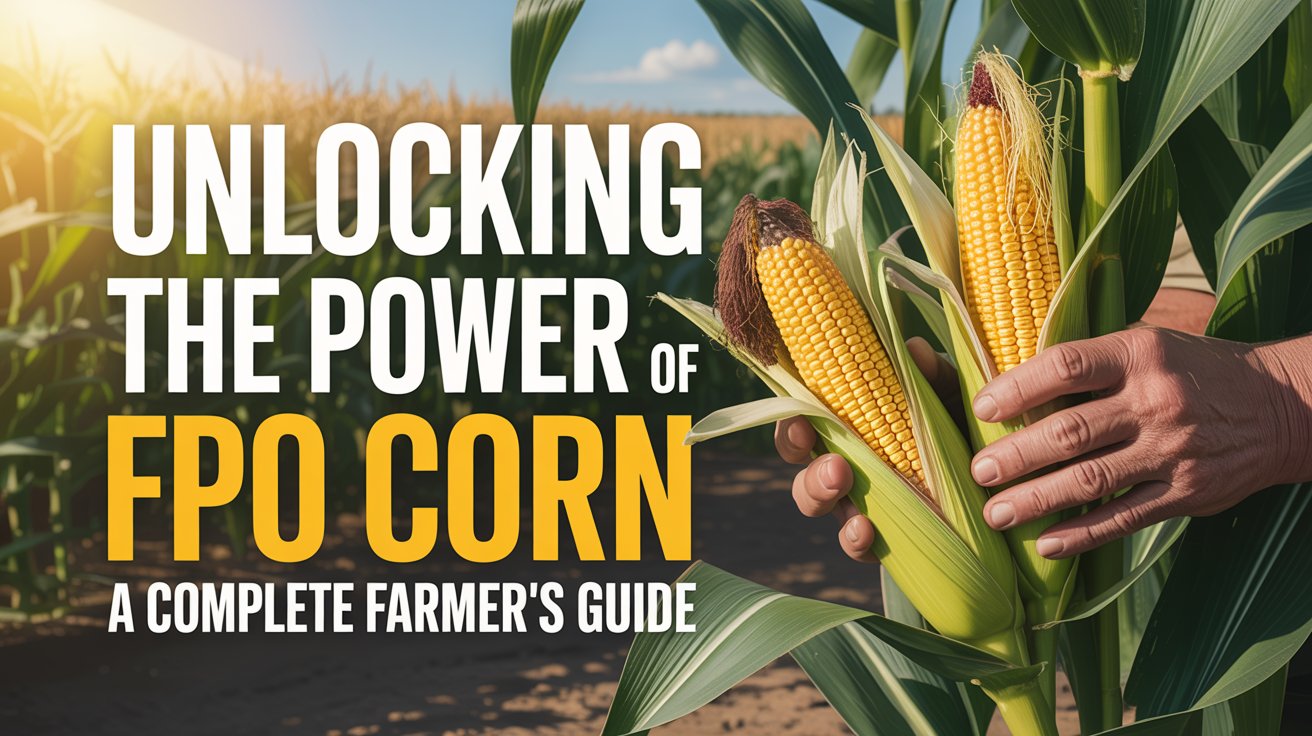
In recent years, agriculture has begun shifting toward more organized, farmer-centric systems, and one of the strongest examples of this transformation is the rise of FPO corn. Unlike corn produced and sold individually by small farmers, FPO corn comes from farmers who are part of a collective known as a Farmer Producer Organization. This model empowers farmers by helping them access better inputs, adopt improved farming practices, and sell their produce collectively at higher, more stable prices. As global and domestic demand for maize continues to increase—in industries such as food processing, livestock feed, biofuels, and packaged foods—the need for reliable, sustainable, and high-quality corn has become more important than ever. FPO corn is quickly emerging as a solution that can help farmers boost income, improve crop management, and strengthen their position in competitive markets.
What Is an FPO (Farmer Producer Organization)?
A Farmer Producer Organization, widely known as an FPO, is a formally registered group of farmers who join together to operate collectively and function like a small agricultural enterprise. Instead of working in isolation, farmers in an FPO become members or shareholders who collaborate in areas such as input procurement, crop planning, training, storage, processing, and marketing. FPOs help farmers reduce production costs by purchasing seeds, fertilizers, and equipment in bulk, while also improving market access through collective selling of produce such as corn. Essentially, FPOs bridge the gap between small farmers and large buyers by organizing farmers into a stronger, more capable group with greater bargaining power and access to modern agricultural solutions.
What Makes Corn Produced by FPOs Different?
FPO corn stands out because it is produced under more standardized, coordinated, and professionally supported conditions compared to corn grown individually by scattered farmers. FPOs often provide training on soil preparation, crop management, irrigation practices, and pest control, ensuring that member farmers follow consistent and improved techniques. This results in higher quality corn with better grain uniformity, cleanliness, and moisture levels. Another important difference is traceability: FPO corn can be traced back to organized farmer groups, which increases buyer confidence, especially in food, feed, and export markets. Many FPOs also engage in grading, drying, and packaging, which adds value and helps them receive better prices than traditional market channels.
You might also like




Types of FPO Corn
FPO corn can be broadly categorized into three major types, each offering its own benefits to farmers and consumers. The first type is conventional FPO corn, produced using standard agricultural practices but supported by collective decision-making and bulk marketing. It focuses on reducing costs and improving yields through better seeds, fertilizers, and scientific crop management. The second type is organic or “Farmer-Preferred Organic” corn, grown without synthetic chemicals and in an environmentally conscious manner. This version of FPO corn caters to consumers seeking chemical-free products and often fetches premium prices in health-focused markets. The third category includes value-added corn products, such as corn flour, baby corn, roasted maize, and corn grits, which many FPOs produce through small processing units. This type increases farmer income because processed products generally have higher market value than raw grain.
How FPO Corn Production Works: Step-by-Step
Producing FPO corn involves a systematic, well-organized process that begins long before seeds touch the soil. The first stage is pre-season planning, where the FPO determines how much corn its members intend to grow and then negotiates bulk deals for seeds, fertilizers, crop nutrients, and pest-control products. Bulk procurement ensures farmers receive high-quality inputs at significantly lower prices. During the growing season, FPOs conduct training programs, field demonstrations, and expert consultations that guide farmers on seed spacing, irrigation scheduling, nutrient management, and disease prevention. This support helps farmers follow modern, research-based practices that lead to healthier and more productive corn crops.
At harvest time, the FPO coordinates collection centers where farmers bring their produce for cleaning, drying, and grading. Proper drying is crucial because corn must reach a safe moisture level to avoid spoilage. After post-harvest processing, the FPO aggregates large quantities of corn and negotiates directly with bulk buyers like food companies, poultry feed manufacturers, or wholesalers. Through collective selling, farmers receive better prices than they would get from local mediators. This structured system allows FPO corn to maintain high quality throughout the supply chain while ensuring farmers earn fair and profitable returns.
Key Benefits of FPO Corn for Farmers
Farmers who produce and sell fpo corn experience numerous advantages that directly impact their income, productivity, and long-term sustainability. One of the biggest benefits is cost reduction: by purchasing inputs collectively, FPO farmers spend much less on seeds, fertilizers, and equipment. This cost savings can be substantial, especially for small and marginal farmers who often struggle with high input prices. Another benefit is the improvement in yield, as the technical training provided by FPOs helps farmers adopt modern agricultural methods and avoid common mistakes. With access to expert advice, yields often increase significantly compared to traditional practices.
The most important advantage, however, is better market prices. Since FPO corn is sold in bulk and meets quality standards, it is more attractive to large buyers who are willing to pay higher rates for consistent, traceable produce. FPOs also help farmers avoid exploitation by local middlemen who traditionally dominate village markets. Beyond financial gains, farmers receive access to credit, government schemes, crop insurance, and value-addition opportunities, making FPO membership a powerful tool for transforming rural livelihoods.
Economic Impact of FPO Corn
The production and marketing of FPO corn generate significant economic benefits not only for individual farmers but also for entire rural communities. When farmers start earning more through collective bargaining, they are able to reinvest in their farms, adopt better technologies, and improve their overall standard of living. Higher income creates a ripple effect, stimulating local businesses such as input shops, transport services, and small processing units. Moreover, many FPOs create direct employment for youth by hiring staff for operations like storage management, quality checking, packaging, and marketing.
By offering stable and competitive prices, FPOs help reduce the uncertainty and volatility that often discourage farmers from growing maize. The aggregated production of FPO corn also makes it easier for industries—such as feed mills, starch factories, and food processors—to secure reliable supplies. This strengthens both local and national agricultural markets and enhances the economic resilience of farming communities.
Sustainability & Organic Potential of FPO Corn
Sustainability is an increasingly important aspect of modern agriculture, and FPO corn plays a major role in promoting environmentally responsible farming. Many FPOs encourage farmers to adopt organic or semi-organic methods that reduce the use of synthetic chemicals and focus on natural soil enrichment. Practices like crop rotation, compost application, integrated pest management, and efficient water use help maintain long-term soil fertility and reduce environmental impact. Organic FPO corn, in particular, has great potential in premium markets where consumers value chemical-free and eco-friendly products.
Furthermore, FPOs often train farmers in climate-smart agriculture, helping them adapt to unpredictable weather conditions, droughts, or pest outbreaks. By promoting resilient crop varieties and advanced farming techniques, FPO corn contributes to sustainable food production that protects both farmers and ecosystems.
Challenges Facing FPO Corn Initiatives
Despite the many advantages, FPO corn production also faces several challenges. Building a strong FPO requires initial funding, proper management, and committed leadership—all of which can be difficult to secure in rural areas. Many newly formed FPOs struggle with limited working capital, making it hard to invest in storage facilities, processing units, or marketing efforts. Another major challenge is market linkage: connecting directly with big buyers requires negotiation skills, certifications, and reliable logistics, which some FPOs are still developing.
In addition, farmers may initially resist adopting new practices or participating in collective systems, especially if they are used to traditional individual selling. Infrastructure issues like poor roads, lack of warehouses, and shortage of quality testing tools can also hinder the growth of FPO corn initiatives. However, with proper government support, training, and community participation, these challenges can be overcome.
Real-World Examples and Success Models
Across regions where FPOs are active, there are countless success stories of farmers who have significantly improved their livelihoods through the production of FPO corn. Some FPOs have even launched branded corn products such as packaged corn flour or grits, which retail at higher prices and create stronger recognition for the farmers’ efforts. These success models demonstrate that when farmers work collectively and follow a structured approach, they can transform agriculture from a low-profit activity into a sustainable and rewarding enterprise.
Future of FPO Corn
The future of fpo corn looks promising, driven by advancements in technology, digital marketplaces, and government programs that encourage farmer collectivization. Online trading platforms and mobile apps now allow FPOs to compare prices, negotiate with buyers, and access real-time market data. Precision farming tools, such as soil sensors, drones, and climate apps, will further improve the productivity and quality of corn grown under FPO guidance. As demand for high-quality maize increases in global markets, FPO corn has the potential to become a major contributor to agricultural exports and rural economic growth.
Conclusion
FPO corn represents a powerful shift toward organized, efficient, and profitable farming. By bringing farmers together, providing access to resources, and enabling direct market connections, FPOs help transform maize cultivation into a sustainable and income-boosting agricultural enterprise. For small and marginal farmers, FPO corn offers an opportunity to break away from traditional limitations and move toward a future of stability, growth, and improved livelihoods. As technology advances and market demand evolves, the role of FPO corn will continue to expand, strengthening rural economies and supporting a more resilient agricultural system.
Do Read: Cassasse: A Deep Dive into the Caribbean’s Heritage Stew