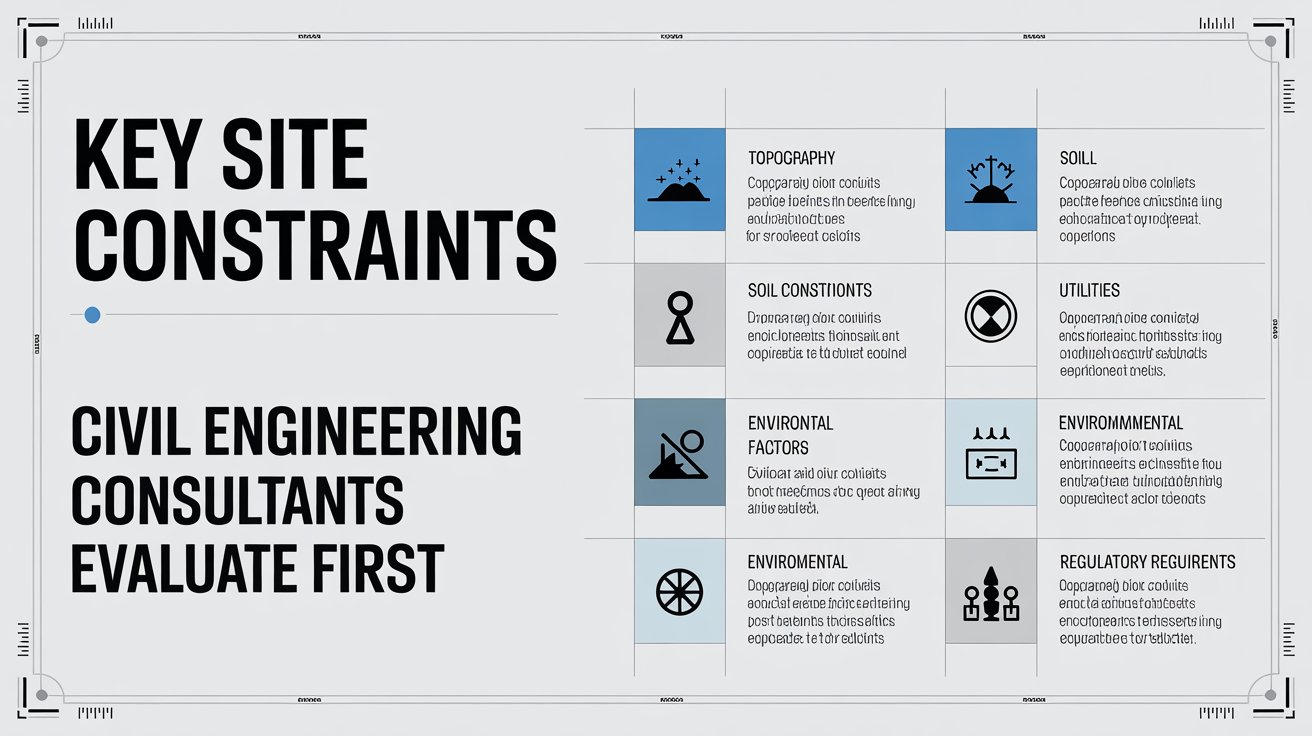
Early project decisions often set the tone for everything that follows, especially on sites that will support commercial buildings or public infrastructure. Civil engineering consultant teams look at what the land allows before design concepts move too far ahead. For projects throughout Tennessee, these first evaluations shape the direction of civil engineering and land development work long before a foundation is poured.
Early Review of Soil Strength and Subsurface Conditions
Soil behavior determines how stable a structure will be, no matter how well it is designed. Civil engineering services start by checking load-bearing capacity, moisture content, and the depth of firm layers below the surface. These findings influence whether foundations require reinforcement, deeper footings, or specialized materials.
Engineers also study subsurface variability across different parts of the site. The conditions beneath one corner of a property may be entirely different from another, which affects grading plans and construction phasing. Tennessee engineering firms rely on this data to avoid settlement problems, unexpected excavation delays, and costly redesigns later on.
You might also like




Identifying Drainage Paths That Shape Site Layout
Natural water movement determines where buildings, parking areas, and underground utilities can be safely located. A civil engineering consultant evaluates how water flows during storms, how fast it collects, and which direction it moves as it leaves the property. Even small elevation changes can redirect runoff toward structures if drainage is not planned correctly. Engineers refine these paths so the site handles both daily use and severe weather without flooding. Designs may include swales, retention features, or regrading to ensure stormwater leaves the property safely. Civil engineering and land development teams use these patterns to prevent erosion, protect foundations, and keep paved areas from deteriorating prematurely.
Evaluating Slope Limits Affecting Buildable Areas
Slopes influence everything from road alignment to the size of building pads. Engineers analyze gradients to understand which portions of the property can support structures, parking, and access roads without requiring excessive cuts or fills. Too much slope often increases construction cost and impacts how utilities are installed.
Once slope limits are clear, teams outline buildable zones and identify areas requiring stabilization. Tennessee engineering firms may suggest retaining systems, terracing, or soil reinforcement methods when steep conditions need adjustment. These choices help maintain long-term stability and reduce ongoing maintenance concerns.
Locating Utilities That Restrict Excavation Zones
Existing underground and overhead utilities shape where excavation can occur safely. Gas lines, sewer mains, water taps, electric conduits, and telecom routes must be identified to avoid service disruptions or hazards. A civil engineering consultant narrows down which utility conflicts require rerouting and which areas must remain untouched.
Understanding these limits helps refine building placement and trenching strategies. Engineers also check capacity levels of nearby utility networks to ensure the site can handle future demands. Civil engineering services often coordinate with municipal departments to update records and plan necessary expansions.
Studying Access Points Needed for Safe Site Entry
Commercial sites must support predictable traffic movement from the start. Engineers assess road widths, sight distances, turning radii, and traffic volumes near the property. These details influence whether turn lanes, signal upgrades, or additional entry points are needed. After reviewing the constraints, engineers create access configurations that balance safety and convenience. Some locations require shared driveways, revised curb cuts, or alignment changes to meet standards. Civil engineering and land development teams design these access points so deliveries, customers, and emergency vehicles can enter and exit efficiently.
Mapping Environmental Buffers That Guide Design Choices
Protected areas such as wetlands, creeks, forests, and habitat zones all affect how a site can be developed. Civil engineering consultant teams identify required setbacks and buffer widths that must remain undisturbed. These restrictions influence road placement, drainage design, and building shape.
Preserving buffers can also provide natural benefits for the project. Vegetation helps control runoff, improve stormwater quality, and reduce heat around paved areas. Tennessee engineering firms integrate these features into layout decisions, blending regulatory compliance with practical site performance.
Checking Floodplain Boundaries Influencing Elevations
Floodplain maps help engineers understand how rising water may affect structures during major storm events. Civil engineering services determine which elevations will remain safe and how much fill might be required to lift building pads above flood levels. These decisions protect future occupants and keep insurance requirements manageable.
Engineers also examine how changes to the site could influence nearby properties. Managing fill, grading, and drainage ensures floodwaters do not shift in ways that affect the surrounding land. These efforts support responsible civil engineering and land development in areas prone to stormwater concerns.
Reviewing Right-of-way Limits Impacting Project Footprint
Right-of-way boundaries determine where utilities, roads, and pedestrian paths must remain open for public use. Engineers mark these limits early so designers understand the true space available for development. Encroaching on these areas can delay permits or require variation approvals.
Once boundaries are mapped, civil engineering consultant teams shape the site plan around them. Tennessee projects often rely on precise surveying to avoid setbacks during construction. Keeping these limits clear ensures the project fits correctly within legal property lines and public access areas. Civil engineering and land development projects benefit greatly from understanding these constraints at the very start. Ivaldi Engineering helps clients evaluate these conditions, refine site layouts, and develop solutions that keep commercial projects moving forward with confidence.
Do Read: The Role of a Land Development Civil Engineer in Modern Infrastructure Projects